


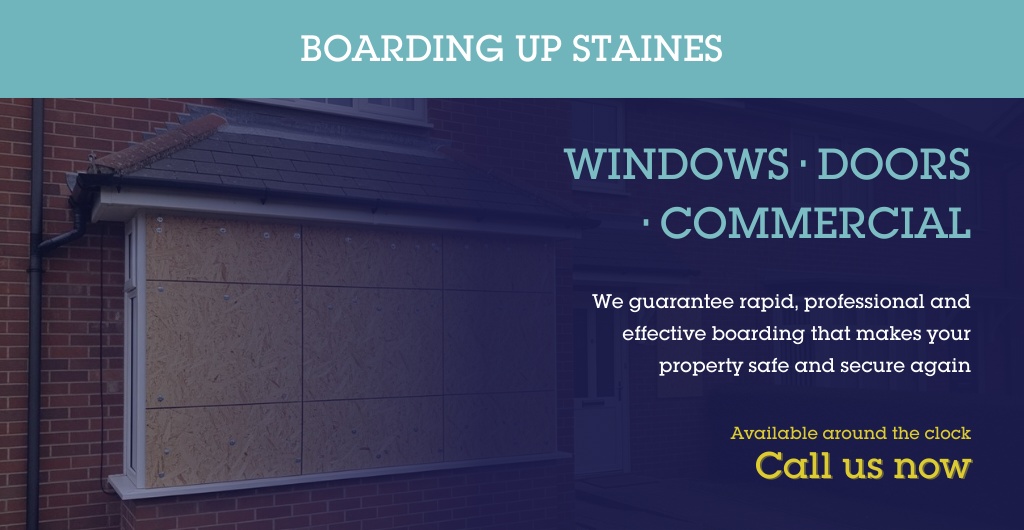
Boarding Up Insurance Claims in Staines
When we board up a property in Staines, you receive three documents to pass to your insurer: an itemised invoice, time-stamped before and after photographs, and a written statement of the work done. Together they show what was damaged, what we made safe and how we did it. Your insurer decides what’s covered. Our job is to do the agreed work properly and record it clearly so your claim has a solid starting point.
If a window, door or shopfront is open right now, Call 01784 774 186. A person answers 24 hours a day, and we can talk through the boarding and the paperwork on the same call.
What to do first
The order matters less than staying safe. These steps cover most situations:
- Keep clear of broken glass and anything unstable. Don’t try to pull out loose panes or prop up a damaged door.
- After a break-in, report it to the police and write down the crime reference number. Your insurer will almost certainly ask for it.
- Contact your insurer and tell them what’s happened, including that the property needs making safe.
- Photograph the damage, but only if you can do it safely. If you can’t, that’s fine. We take our own before photographs when we arrive.
- Call us with your postcode so we can work out access, timing and a quote.
The paperwork we provide
Itemised invoice
The boarding up invoice for your insurance claim lists the work line by line rather than as a single total. It covers the openings we secured, the materials used (for example, exterior-grade plywood or OSB for smaller openings), the fixings, and any extra work such as securing a forced door frame or clearing glass to make the area safe. A loss adjuster can see exactly what was done without having to ring round for an explanation.
Time-stamped before and after photographs
Before we start, we photograph each damaged opening. When we’ve finished, we photograph the same openings boarded and secured. The time stamps show when the damage was recorded and when the property was made safe, which is often what insurers want to establish first.
Written statement of the work done
This is a plain description of the visit: which openings were affected, what condition they were in, how each was secured and anything we noticed that the permanent repair will need to deal with, such as a split frame or a damaged lock. It’s written so you, your insurer and whoever carries out the permanent repair can all follow it.
Taking your own property damage photographs
Your own photos help, particularly if they’re taken before anything is moved. If it’s safe to take them:
- Start with a wide shot showing the whole window, door or shopfront, then move closer.
- Photograph from outside and, if you can get in safely, from inside too.
- Capture forced locks, splintered frames and broken glass where they lie, without touching them.
- Leave the phone’s date and time settings on so the images carry their own record.
Never climb onto a roof, lean out of an upper window or go into a building that might be unsafe to get a photograph. Our before photos cover what you can’t reach.
Some of the older housing in Staines, such as the 19th-century villas and terraces around Knowle Green and along London Road, still has original timber frames. A clear close-up of a damaged frame helps us judge on the call whether we can fix boards without causing further damage, or whether the frame needs discussing first.
After a burglary
Boarding up after a burglary is the most common reason people ask us about insurance. Once the police have been told and you have a crime reference number, we can secure the point of entry, whether that’s a smashed window or a door forced off its lock or frame. If the frame is too damaged to hold fixings, we explain the options before doing anything, and that discussion is reflected in the written statement. There’s more on this on our burglary repairs page.
For fire damage, we can only start once the fire service has handed the site back. Our work then covers securing the openings; smoke and odour clean-up is a separate matter for specialists.
Agreeing the work and the quote
You get a free, clear quote on the call before any work starts. The price depends on the number and size of openings, height and access, the materials and board thickness, the fixing method, whether a damaged door or frame needs securing first and how much glass or debris needs making safe. Because the quote is agreed in advance and the invoice is itemised against it, there are no surprises for you or your insurer. Our pricing page explains each factor in more detail.
Boarding is the first step
Boarding makes the property secure and weatherproof while permanent repairs, such as new glazing or a replacement door, are arranged. Our paperwork records the temporary work clearly, so the next stage of the claim can follow on from it.
What we can and can’t help with
We’re fully insured (certificate on request), DBS-checked and have over 10 years’ experience securing damaged property. We’re not loss adjusters or legal advisers, so we can’t tell you whether a claim will be accepted or what your policy covers. Your insurer or broker is the right person for those questions. What we can do is make the property safe and give you accurate, well-organised records of the work.
Common questions
What paperwork do insurers need for boarding up? Each insurer sets its own requirements. Our itemised invoice, time-stamped photographs and written statement cover what’s typically asked for about the make-safe work. Your insurer may want other items too, such as the crime reference number.
Should I wait for my insurer before having the property boarded? Tell your insurer what’s happened as soon as you can and ask what they need from you. They decide what’s covered, so it’s worth checking with them.
Can landlords and letting agents use the same paperwork? Yes. The documents describe the property and the work, so they’re useful to whoever is handling the claim. More general questions are answered on our FAQs page.
Talk to us about boarding and your claim
Call 01784 774 186 or Email us. Give us your postcode, the type and rough size of each damaged opening, and send a few photos if you can take them safely. We’ll talk through access, confirm the work and give you a clear quote before anything starts.