

What Is Boarding Up? A Plain Guide for Staines Property Owners
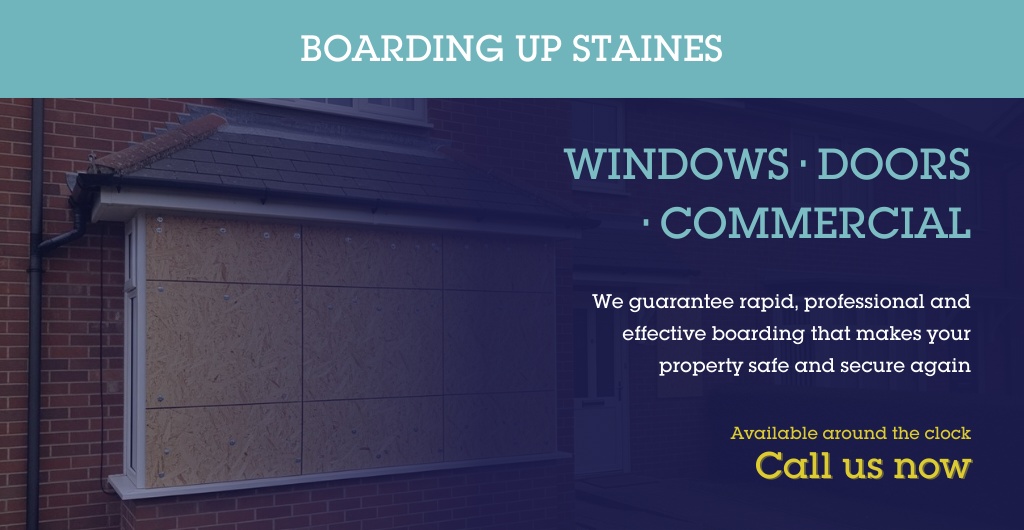
Boarding up is the temporary securing of a damaged or vulnerable opening, such as a broken window, a forced door, a smashed shopfront or a hole in a roof, by fixing sheet timber firmly over it. It closes the gap quickly, keeps weather and intruders out, and makes the area safe around broken glass. In Staines, as anywhere, it’s the step between the damage happening and the permanent repair being fitted.
This page explains what boarding up involves, which materials and fixings are used, when it’s the right call and what follows it. If something has already been damaged and you need help now, the details for getting in touch are at the end.
What boarding up actually does
A boarded opening does four practical jobs:
- Closes the gap. Rain, wind and debris stay out, which limits further damage to floors, stock and furnishings.
- Deters entry. A properly fixed board is a physical barrier that’s hard to remove from outside without tools and time.
- Makes the area safe. Loose shards are removed or covered, so people can move around the property without stepping on or brushing against broken glass.
- Buys time. Glazing, doors and frames often have to be measured and ordered. A secure board means you aren’t rushing that decision or leaving the property exposed while you wait.
It’s a make-safe, not a finished repair. Once the opening is secured, your glazier, joiner or builder can carry out the permanent work on a sensible timescale.
How does boarding up protect an opening?
The protection comes from three things working together: the board, the fixings and how the board meets the frame or wall.
The board
Most openings are covered with exterior-grade plywood, typically 18mm thick. Plywood is made from layers of veneer glued with alternating grain, so it resists splitting and holds fixings well near its edges. Exterior grade is made to cope with damp, which matters for a board that might be in place for days or weeks.
OSB (oriented strand board) is a sensible choice for smaller openings, such as a single pane, a small side window or a door panel. It’s rigid and fit for the job at that scale.
Plywood or OSB?
There isn’t one correct answer for every job. As a rough guide:
| Situation | Usual choice |
|---|---|
| Large windows, doorways, shopfronts | Exterior plywood, typically 18mm |
| Small panes or panels | OSB is often suitable |
| Openings exposed to weather for longer | Exterior plywood |
| Roofs and skylights | Depends on the size and the structure beneath |
The thickness and material are agreed when we discuss the job, because they affect both the security and the quote.
The fixings
Fixings matter as much as the board. Where security is a concern, we use security or anti-tamper fixings, which are much harder to undo with ordinary tools than standard screws.
Fixing to the frame
Where the frame is sound, we fix in a way that’s as non-destructive as the frame allows, so there’s less making good once the permanent repair goes in. That’s worth knowing in Staines, where much of the surviving housing dates from the 19th century, including villas and smaller terraces, and older timber frames deserve some care.
If a frame is badly damaged, split by a forced entry or weakened by fire, there may be nothing solid to fix into. In that case we explain the options before starting, because the method may need to change and that changes the scope of the work.
When does a property need boarding up?
The common reasons are:
- Broken windows after a break-in, an accident or a storm. See window boarding for how individual windows and larger glazed areas are covered.
- Forced or damaged doors, where the door, frame or lock can no longer be trusted to hold. Door boarding covers securing the door, frame and lock after forced entry.
- Shopfronts and commercial glazing in shops, offices, restaurants and warehouses. The High Street, Market Square and the shops at the south-eastern end of Church Street all have the kind of large glazed frontages where a broken pane leaves a business exposed until it’s covered.
- Roofs and skylights damaged by weather or falling debris. These are boarded from proper access, and nobody should climb onto a roof themselves to check.
- Fire damage, once the fire service has handed the site back and it’s safe to work.
- Empty or void properties, where windows and doors are boarded so a vacant building isn’t left open to entry or weather.
What happens when you arrange boarding up
You speak to a person on the phone, at any hour, including nights, weekends and bank holidays. We ask for:
- the postcode, so we can work out when we can reach you
- the type and size of each opening, and how many there are
- access: ground floor, upper floor, roof or skylight, and whether ladders are needed
- safe photographs, if you can take them without going near broken glass or unsafe areas
The quote is given on the call. It’s free and clear, and it’s agreed before any work starts. It depends on the number and size of openings, height and access, the board material and thickness, the fixing method, whether a damaged door or frame needs securing first, and whether debris or glass has to be made safe. The pricing page explains these factors in more detail.
On site, the van carries boarding stock and fixings. We make the area safe, cut and fit the boards, and fix them securely.
What you receive afterwards
Once the work is done, you get:
- Secured openings, boarded as agreed on the call
- An itemised invoice
- Time-stamped before and after photographs
- A written statement of the work done
That paperwork is useful if you’re making a claim. Your insurer decides what’s covered, and we aren’t loss adjusters, but clear records make the conversation easier. Our insurance claims guide explains how to use them.
If the damage came from a break-in, report it to the police, keep the crime reference number, contact your insurer, and photograph the damage only if it’s safe to do so.
Who carries out the work
Boarding Up Staines is an independent local boarding-up service with over 10 years’ experience. We’re fully insured, with the certificate available on request, and DBS-checked. We cover Staines and the surrounding area, and we confirm whether we cover your address when you call.
Talk it through
If you have an opening that needs securing, or you just want to know whether boarding is the right step, ring us with your postcode, the type and size of the opening and a sense of the access. Safe photographs help us give an accurate quote.